When to Use AI-Generated Visuals and When to Rely on Professional Design

The Use of AI-Generated Images in Your Design Projects
As artificial intelligence tools become more accessible, many clients now include AI-generated images in their creative briefs or reference materials. These visuals are often created using platforms such as ChatGPT, Midjourney, Gemini, Photoshop, Canva, and similar tools. In most cases, they are intended to communicate an early idea, explore a visual direction, or spark discussion before formal design work begins.
Used this way, AI-generated images can be valuable during early ideation. They allow teams to move quickly, test visual directions, and align on a general look or mood. However, it is important to distinguish between using AI as a reference tool and relying on AI-generated imagery as a design asset for real-world production.
When AI outputs are treated as references, they enable exploration without being constrained by technical, brand, or production constraints. Challenges arise when these visuals are used as assets or as the foundation for concept development. Although AI-generated images can appear polished and compelling, they often do not align with professional design standards, production requirements, or established brand guidelines. In these cases, they can introduce limitations, rework, and inefficiencies that affect both project quality and timelines.
At Creativeblox Design Studio, we use AI selectively within our internal workflow while ensuring that all final deliverables meet professional design, production, and legal standards. Understanding where AI fits and where it does not is essential for protecting your brand, budget, and long-term scalability.
When AI-Generated Images Are Not Suitable for Design Development
Key risks to watch before using AI-generated visuals as production assets
Professional design for packaging, print, and e-commerce depends on technical accuracy. Artwork must use controlled color systems, consistent resolution, and editable layers that support revision and production. AI-generated images are typically created in RGB color space, flattened, and often contain inconsistencies that cannot be corrected without rebuilding the artwork. This increases revision cycles and can delay approvals.

Production requirements influence design decisions early in a project. AI-generated images do not account for packaging structures, dielines, folding logic, material thickness, print tolerances, or manufacturing constraints. When these realities are introduced, concepts based on AI imagery often require redesign, which adds time and cost.

Brand clarity relies on consistency across products, formats, and release cycles. Because AI generates each image independently, it struggles to maintain consistent proportions, stable color usage, cohesive typography, and repeatable visual systems. Early reliance on AI imagery can create misalignment that becomes more difficult and expensive to correct as a brand scales.

Legal and retail requirements must be considered from the beginning of a design project. Most AI-generated images lack clear ownership or exclusivity, which is essential for trademark registration, retail listings, and long-term brand value. AI tools also do not account for safety warnings, age ratings, barcode placement, or platform-specific e-commerce standards. Discovering these issues late can expose you to legal liability and force redesigns near launch.

Our Studio’s Approach to AI
We do not discourage the use of AI as a creative thinking tool. We do discourage the use of AI-generated images as design assets or as the foundation for professional production work.
When clients include AI-generated images in a brief, we review them to understand intent, style, and direction. From there, our team professionally develops or rebuilds all concepts, artwork, and layouts to ensure accuracy, consistency, and production readiness.

Creativeblox Design Examples

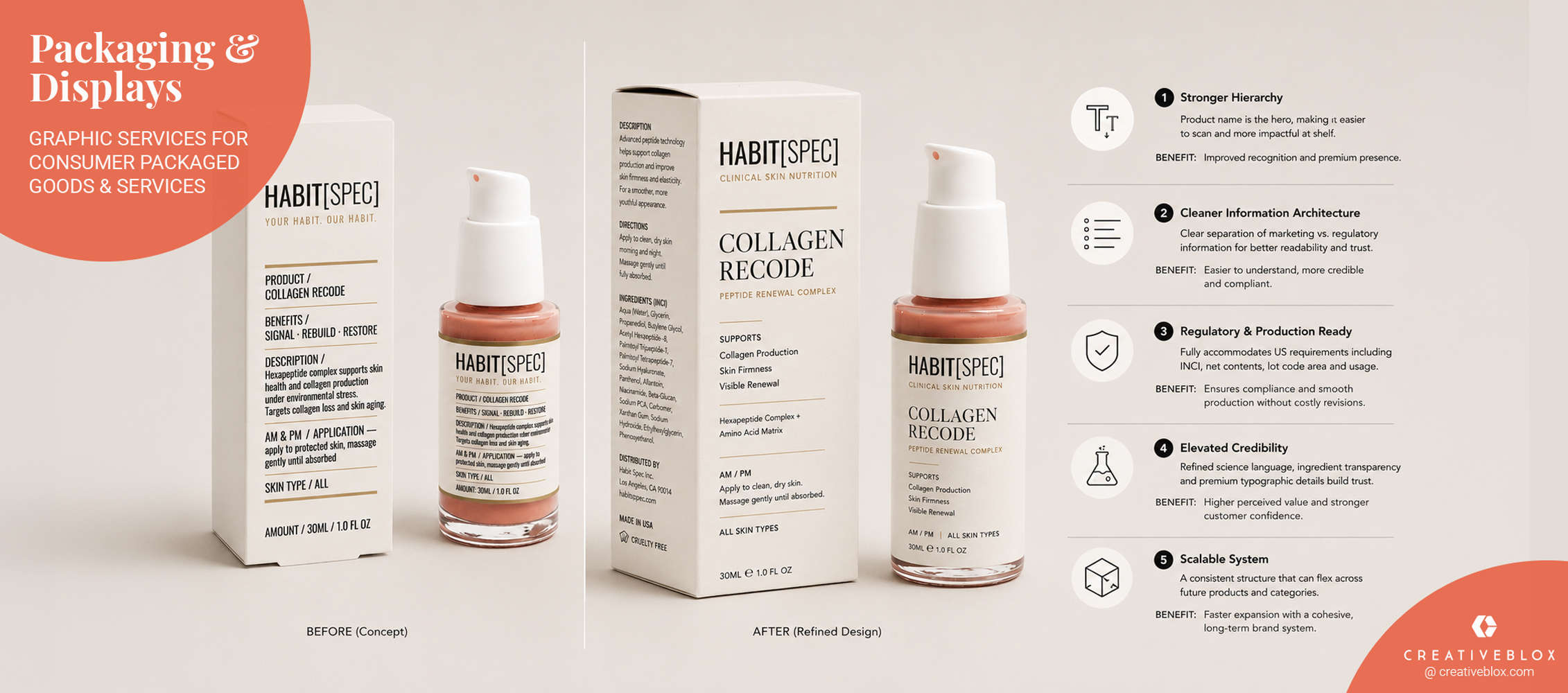
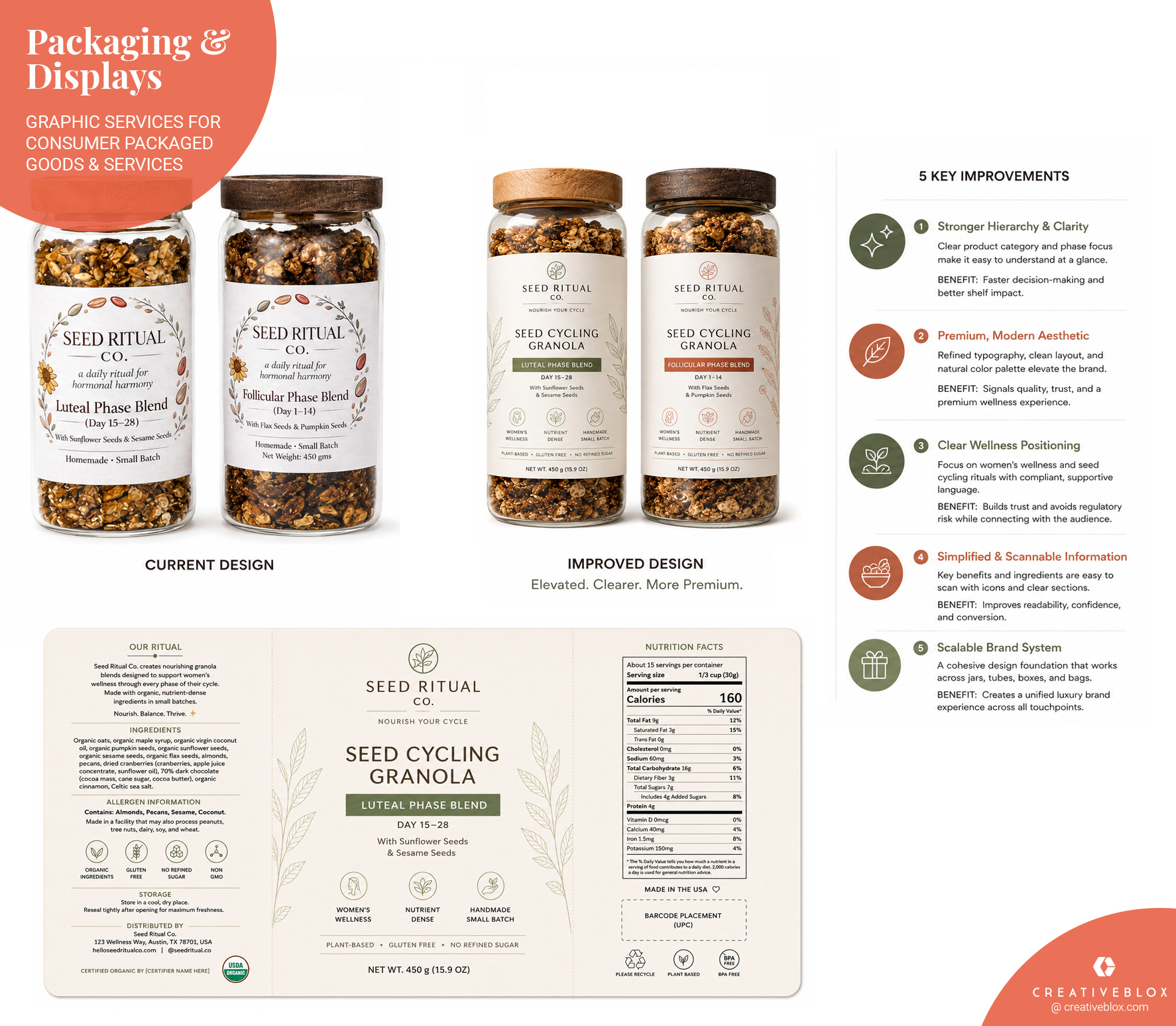
AI Supports Ideation. Professional Design Makes It Production-Ready.
Our services include packaging design, logo design, product photography, e-commerce video editing, and Amazon-ready visual content. Across all of these services, our process prioritizes original design, structured brand systems, technically correct files, and compliance with manufacturing, retail, and e-commerce standards.
AI may support ideation and exploration. It does not replace professional design judgment, production experience, or responsibility for legal and commercial outcomes.
For projects intended for production, retail, or ecommerce, relying on AI-generated visuals at any stage introduces unnecessary risk, additional revisions, and potential legal exposure. Professional design ensures clarity, scalability, and long-term brand value.
Disclaimer Regarding AI-Generated Content
AI-generated images are used at the client’s discretion and are reviewed only as visual references. Creativeblox does not use AI-generated images as final design assets and does not guarantee trademark eligibility, copyright ownership, or legal clearance for AI-generated visuals provided by clients. All final deliverables are professionally created, modified, or rebuilt to meet production, branding, and compliance requirements.
Get Started with Creativeblox
If you are exploring AI in your creative process and want to ensure your final designs are production-ready, brand-consistent, and compliant with e-commerce and retail requirements, Creativeblox can help.
We combine experienced design leadership with modern tools, including AI, used thoughtfully and responsibly. The result is professional packaging design, logos, product photography, and e-commerce video content that protect your brand and support long-term growth.
Visit CreativeBlox.com to learn more about our services and get in touch with our team. Together, we can elevate your e-commerce game and drive your sales to new heights.
About Creativeblox
Creativeblox is a professional design studio specializing in packaging design, branding, product photography, and e-commerce content for Amazon and online retail. We help brands move from concept to market with confidence, accuracy, and consistency.